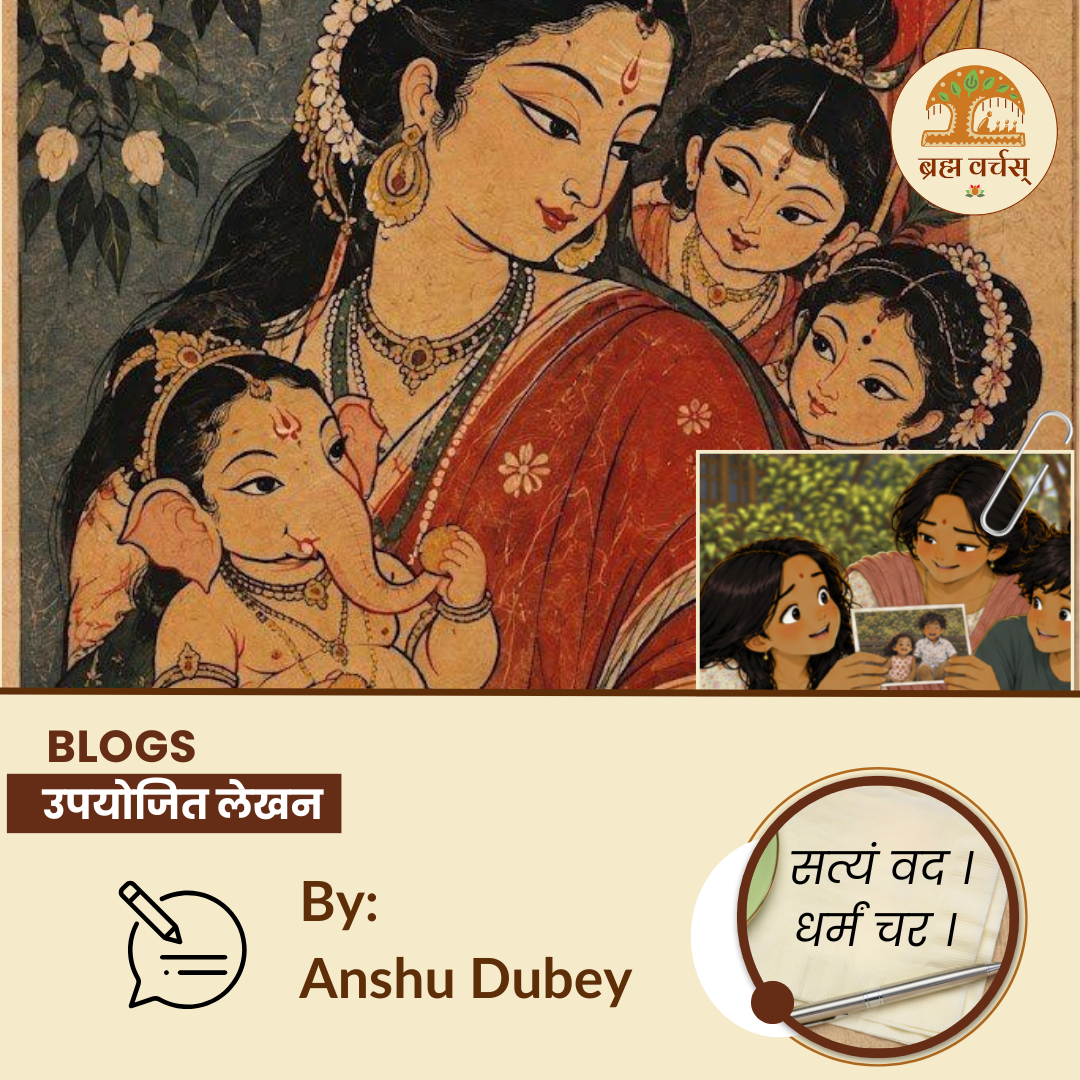
“प्रजातन्तुं मा व्यवच्छेत्सीः।” Do not break the thread of progeny. — Taittiriya Upanishad, Shikshavalli 1.11.1
Through children, the thread of life continues, carrying a civilization’s knowledge, values and responsibilites into another generation. At the heart of this continuity stands the mother. Who nurtures new life within her and lovingly brings it into the world.
Tomorrow, 1st November, is Ahoi Ashtami. Rooted in the lunar calendar, this observance brings a mother’s love into prayer and practice. Mothers observe a vrata, worship Ahoi Bhagawati – a form of Maa Parvati- and offer arghya to the stars before concluding the fast, and offers various sweets and eatables to children, according to family tradition. The prayer is for santati, our children. Though often associated with sons, daughters belong equally within this circle of care. Bringing children into the world and raising them is a dear, lifelong responsibility.
And the mother herself needs care.
Both parents contribute to conception; the woman’s reproductive system provides the home where new life develops. Ayurveda begins attending to this responsibility well before pregnancy. Bhava Mishra’s Bhavaprakasha, Garbha Prakarana opens:
चिकित्सायां शरीरी ह्यधिकृतः स शरीरी यथोत्पद्यते तद्बोधयितुं गर्भोत्पत्तिप्रकारमाह। गर्भोत्पत्तिभूमिस्तु रजस्वला स्त्री ततो रजस्वलास्वरूपमाह।
Meaning: The embodied person is the subject of science of life and treatment. To explain how that embodied person comes into being, the process of conception is described. The ground for conception is the menstruating woman; therefore, her nature is described first.
Significantly, this chapter (Garbha Prakarana) then addresses care during periods: simple food, restraint and avoidance of exertion. Care for future life begins with care for the woman’s monthly rhythm.
This is Rajaswala Paricharya – Ayurveda’s guidance for food, activity and conduct during periods, understood with its wider concern for reproductive and lifelong wellbeing.
As this knowledge recedes from family life, many girls grow up with fragments of information. Their difficulties deserve attention. A review of 32 Indian studies estimated period pain among students at 70.2%. In another Jaipur nursing-student study, 54.6% reported missing at least one class per cycle. Behind these numbers are girls missing lessons and women carrying discomfort through everyday life. Their experience calls for us to revisit the care Ayurveda prescribes, understand its reasoning, and bring that knowledge back into our homes.
From menarche to menopause, women deserve knowledge they can live with. Knowing which sanitary product to use is only a beginning. Advertising that celebrates uninterrupted activity can not explain when a girl needs rest, reassurance or help.
She needs comforting conversations: space to ask awkward questions, understand her body and receive caring, thoughtful answers.
Tomorrow, we offer the Rajaswala Paricharya comic book for girls aged 10-16, drawing on shastric guidance from Ayurvedic texts as “a gift for the daughters of Bharat.” It is our effort to bring this knowledge into homes and make these conversations easier.
Parents, caregivers, educators and girls themselves: read it, share it and talk together. We specially encourage paper copies – less time on screens, more time reading beside someone who cares or reading in groups.
Let us bring Rajaswala Paricharya back into daily life, thoughtfully and wherever possible.
Explore the comic book here → https://learning.brahmvarchas.org/rp-comic-book/home